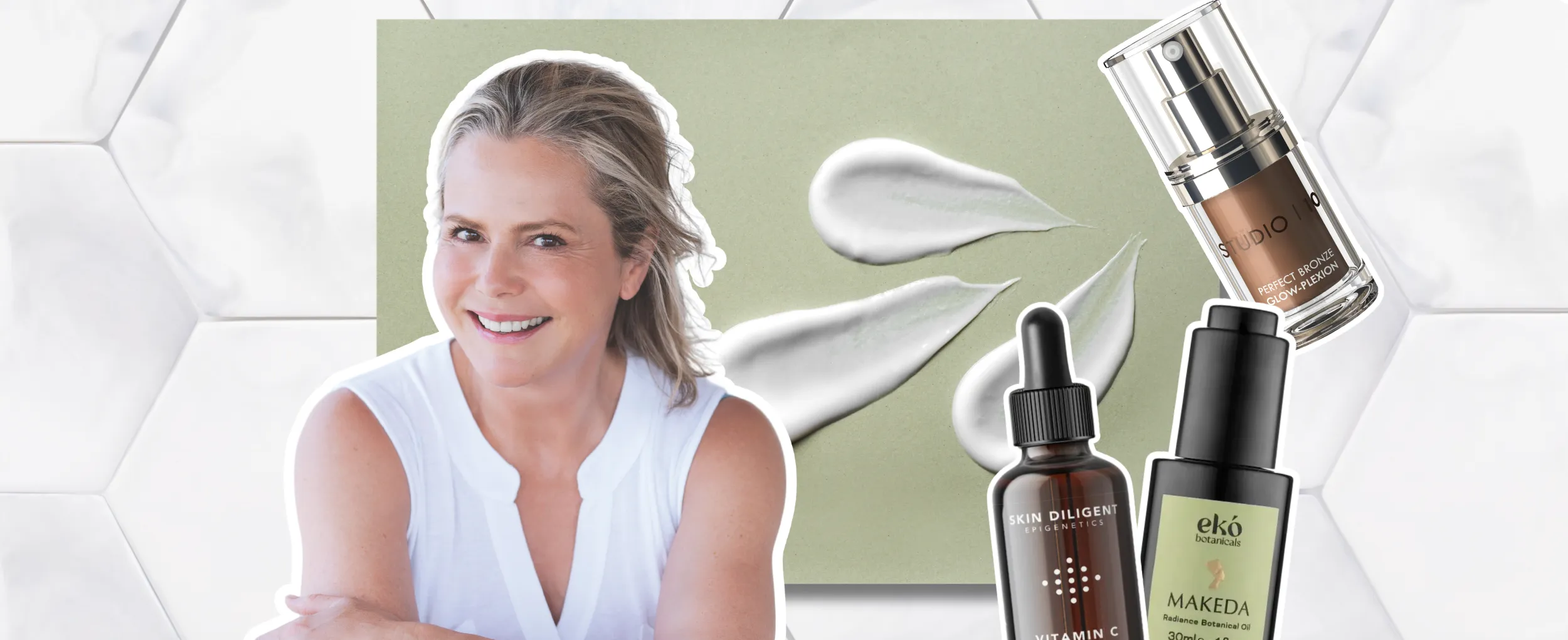

If your skin isn’t looking as taut and firm as it used to, you’re not alone. Liz explains how skin firmness can be impacted by declining collagen and oestrogen in midlife, as well as changes in muscle and body fat. She shares ways to support skin from the inside out, from strength training to diet tweaks, and talks about the toning body cream ingredients to look out for.
Plus: Tips for preventing and treating mosquito bites, contraception options for over-40s, can antihistamines help with perimenopause symptoms, and should I be wary of fish oils?
Stream the episode below, or download the recording via Apple Podcasts or Spotify.
Why skin becomes looser as we age and 6 ways to firm up
Noticing looser, thinner or more crepey skin on your arms, legs or body? Cumulative UV exposure, genetics and changes in body weight can all play a part, but it’s often down to collagen and elastin – the scaffolding fibres that give our skin its strength, bounce and resilience.
As we age, we naturally produce less collagen and elastin, and declining oestrogen during perimenopause and menopause can accelerate this process.
But while we can’t stop the biology of ageing, there are ways to support skin quality from the inside and outside. Here are six to try.
Start strength training
One of the best things you can do is build and maintain the muscle underneath your skin. Resistance training gives the skin a stronger framework, particularly around the arms and legs.
Liz recommends lifting dumbbells or even working with your own bodyweight two to three times a week (think squats and press-ups), challenging yourself by progressively increasing the weight as it gets easier.
Feed healthy skin with protein and vitamin C
Our skin is metabolically active and requires protein to regenerate itself. Liz suggests aiming for roughly 30-40g of good-quality protein at each meal, from foods such as eggs, Greek yoghurt, fish, meat and cottage cheese.
Vitamin C is important, too, as our skin needs it to support collagen production. Collagen supplements can be helpful to subtly improve skin hydration and elasticity, says Liz, but she sees them as “an extra rather than the main event”.
Read How to eat your skincare: the best foods for healthy skin
Choose your body cream wisely
Moisturising helps support the skin barrier, and Liz highlights ingredients such as ceramides, glycerine and urea as ones to look out for.
You could also consider a retinol or retinoid body product to encourage cell turnover and collagen production. Start gently – perhaps two or three nights a week – as retinols can cause dryness and irritation at first.
Be sensible about sunshine
Daylight and sensible sun exposure have their benefits – skin needs UVB to synthesise vitamin D, Liz points out. But repeated burning and high cumulative UV exposure will accelerate collagen breakdown.
Seek shade when it’s really hot and the UV index is high, and wear a wide-brimmed hat in strong sunlight to protect the delicate skin on your face.
Embrace red light
Red light may be helpful for supporting skin regeneration. LED masks and infrared saunas are options, but don’t forget you can enjoy the best-quality red light for free outdoors around sunrise and sunset, says Liz, when there is very little UVA and no UVB.
Read Red light therapy – experts reveal what you need to know about this skincare treatment
Explore in-clinic treatments
If you want to go a step further, treatments such as microneedling, laser and ultrasound or radiofrequency can stimulate collagen and provide a degree of skin tightening. Always consult an experienced dermatologist or practitioner and research the evidence behind any treatment before booking in.
“You know, we can’t completely prevent crepey skin, because it’s simply the biology of ageing, particularly after menopause,” says Liz. “But we can improve its quality and resilience by building it from both the inside and outside.”
Also in this episode:
- How can I stop being bitten by mosquitoes?
- Are my breakouts caused by too much vitamin B?
- Tips for treating itchy insect bites
- Can antihistamines help with perimenopause symptoms?
- The reasons your skin might be looking more crepey
- Are body creams effective for firming skin texture?
- Can fish oils cause heart problems?
- Contraception options in your 40s
Links in this episode:
- Alfresco anti bug bite perfume
- Bite Away for insect bites
- Beurer insect bite healer
- Podcast on hormones, histamine and mast cells with Dr Clare Ashby
- Collagen
- Red light
- Read Is the contraceptive pill failing young women? for information on Zoely and Qlaira
- Read The Power of Hormones by Louise Newson
Get in touch with a question for Liz:
- Email: [email protected]
- WhatsApp: 07518 471 846
More from Liz:
Some links may be affiliate links, which help support the show at no extra cost to you. Read our Affiliate Policy for more information.