
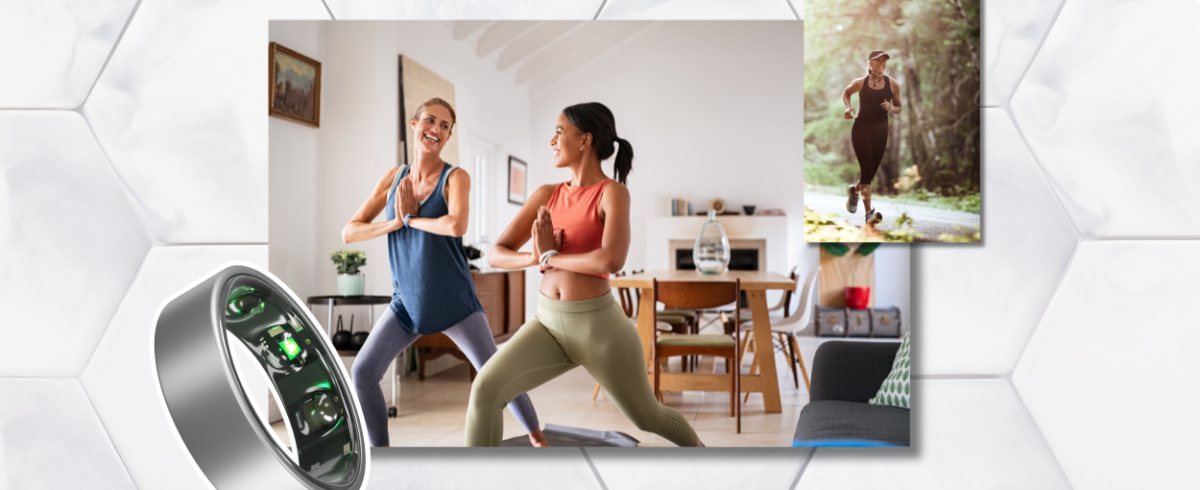
Fitness wearables have come a long way. From the humble pedometer clipped to the waistband of a pair of jeans, to smartwatches and now rings that pack a surprising amount of tech into something on your finger.
I’ve dabbled with wearables over the years – Fitbits, Garmins and the like. And while I love the technology and the insight the stats can provide, I’ve often found myself forgetting to wear them. Before long, the only thing they’re tracking is the dust on my bedside table.
So when I was gifted a Gabit ring to trial for a month, I was intrigued to see whether this smaller, more unobtrusive wearable could become one I actually stuck with.
I used a smart ring for a month – here’s what happened
Getting the right fit
One of the things that’s stopped me from ordering a smart ring in the past is finding the right fit. After all, you’re wearing it 24/7, so it needs to be right.
Gabit makes this particularly straightforward. Simply order a ring sizing kit alongside your device. A few days later, you’ll receive a pack of plastic rings in different sizes in the post. Pop the one that fits most comfortably onto the index finger of your non-dominant hand and wear it for 24 hours. Once you’ve settled on your size, Gabit sends your smart ring along.
Another bonus, at the time of writing, is that Gabit is subscription-free. You buy the ring, download the Gabit app and away you go – there’s no additional monthly fee standing between you and your data.
Understanding the data
Set-up is simple, and relies on a Bluetooth connection between your phone and the ring so that your data can feed through to the app.
The first few days were very much about the Gabit ring adjusting to me – and me adjusting to it. The first time I put it on was early evening. This was perhaps my first mistake. I became surprisingly aware of this little alien object on my finger and, that first night, found myself worrying about what my sleep score would say the following day. Eventually, I took it off.
The following morning, I tried again. Through the course of the day, I forgot it was there and simply let the ring get to work.
After the first couple of days, my stats were already highlighting areas to improve. Take my step count, for example. Despite working out each morning and walking at lunchtime and in the evening, I realised I wasn’t standing or moving nearly enough during the day.
It was a useful reminder that exercise isn’t just about one workout. For long-term health, moving little and often throughout the day is key.
How stressed am I?
Stress was another metric I was particularly interested in.
I was pleased to see that, for the most part, I seemed to be keeping my stress under control – all that meditation and yoga must be paying off! Interestingly, the biggest spikes tended to come when I was exercising, particularly during a long run.
The ring also measures resting heart rate and VO2 max, two metrics I hadn’t previously paid much attention to. As I’ve been gradually increasing my running distance, it was interesting – and motivating – to see Gabit report my figures as ‘excellent’! It was a reassuring reminder that all those miles were paying off.
What about calories?
If you find calorie tracking useful, Gabit also allows you to monitor your estimated calorie expenditure. You can log your food and drinks as you go, giving you an overall picture of your energy intake and expenditure.
Of course, the usefulness of this depends on how accurately you record what you eat, and calorie tracking won’t be right for everyone. But for someone who enjoys having a little more insight into their habits, it’s another tool available within the app.
The sleep-score dilemma
This is where I’m slightly more on the fence about wearing a fitness wearable 24/7.
In the first few days, I found it fascinating to learn more about my sleep – particularly seeing how something as seemingly innocuous as a glass of wine could affect my deep sleep.
But I also noticed how easy it would be to become overly reliant on the app rather than listening to my own body.
One morning, for example, I woke up feeling fresh, rested and genuinely good. I had that lovely ‘leap out of bed’ feeling – only to check my sleep score and discover that it didn’t reflect how I felt.
Almost immediately, I found myself questioning whether I had slept well enough, and feeling slightly guilty about the night before.
For me, that’s probably the biggest lesson from wearing a smart ring: use the data as information, rather than allowing it to become the authority.
Summer-proofed
One thing I’ve really enjoyed about the Gabit is how easy it is to wear. It’s waterproof, so you can swim with it on, and mine survived salty sea swims, sunshine and SPF on a recent Greek holiday without any problems.
After around three weeks of wearing the ring, you also unlock your ‘Bio Age’ – essentially an estimate based on how the device interprets your health and lifestyle habits.
I was thrilled to discover that mine thinks I’m eight years younger than I actually am. If only my passport said the same!
Get by with a little help from your friends
One Gabit feature I didn’t really get around to using was ‘Tribes’. This allows you to connect with friends and family who also have a Gabit, sharing selected metrics such as steps, active score or sleep.
It’s designed to add a little friendly accountability and motivation, which could be particularly useful if you enjoy having someone else to keep you on track.
So, would I recommend it?
Yes, I’m a fan of Gabit.
It highlighted a few areas of my health and lifestyle that could use a little attention – and, importantly, most of the changes it prompted were wonderfully simple. Standing up and moving more throughout the day, being a little more mindful about my wine intake and paying attention to how my habits affect my sleep are the kind of small tweaks that can add up over time.
My one note of caution would be not to become too reliant on the data.
Wearables can be incredibly useful for spotting patterns and encouraging healthier habits, but they’re not a replacement for listening to your own body. If your ring tells you that you’ve had a poor night’s sleep but you wake up feeling fantastic, I’d take the time to notice how you actually feel before letting an app dictate your day.
For me, the best use of a wearable is as a helpful prompt: a little nudge towards better habits, rather than another thing to worry about getting ‘right’.