
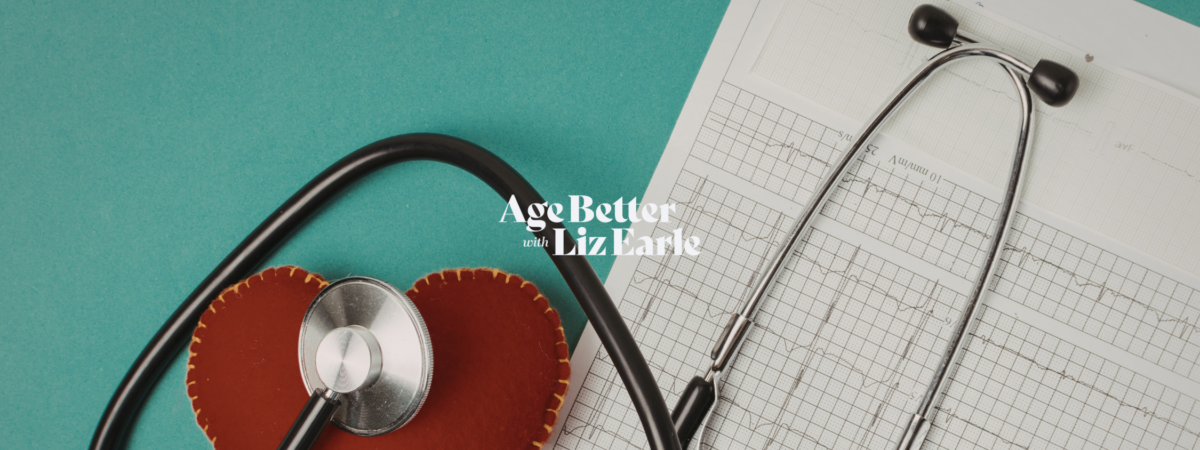
Heart disease kills more women than all cancers combined, but symptoms are often missed because diagnostic tools were designed for men. Health journalist, Meghan Rabbitt, talks to Liz about why medicine has been getting women’s health wrong for decades and how to protect ourselves.
They discuss how the differences in the female body require a more nuanced approach to healthcare, and how heart attack symptoms in women can be more subtle.
Meghan also explains how menopause can increase our risk of heart disease, dementia and autoimmune conditions – and the practical steps we can take to safeguard our health at every age.
Stream the episode below, or download the recording via Apple Podcasts or Spotify.
Why midlife women need to take ownership of their health
For decades, women’s health has been shaped by research based on men. “For far too many years, we studied the male body and applied what we found to women, assuming that we were small men with just a few different parts,” says Meghan.
This gap in research means women’s symptoms are often missed, misdiagnosed or dismissed. And in midlife, when our bodies are changing rapidly, that gap can have real consequences.
How are women’s bodies different?
The female heart is about 25% smaller than the male heart, with narrower arteries and a slightly higher resting heart rate. Yet the tools used to diagnose heart disease were largely designed around male bodies. The result? Heart disease – the number one killer of women – is often overlooked.
Hormones also play a major role. Oestrogen helps keep blood vessels flexible and supports brain function. As oestrogen levels drop during menopause, the risk of heart disease increases and brain health becomes compromised. Up to two-thirds of people with Alzheimer’s are female and researchers suspect it’s our changing hormones that leave us at an increased risk.
Add in rising stress levels from juggling work, family and caregiving, and midlife becomes a critical turning point for long-term health.
What you can do now
Focus on the basics
Double down on healthy lifestyle habits. “It really comes down to the basics – eating a healthy diet, exercising, socialising, getting enough sleep, trying to reduce our toxin exposure,” says Meghan.
Prioritise stress management, seeing where you can outsource some of your to-do list. Think long-term: check your cholesterol levels, attend mammogram screenings, and reduce your alcohol intake. This not only improves your sleep and health but lowers your cancer risk.
Take charge of your own health
“We need to become the CEO of our own healthcare,” says Meghan, who recommends keeping a detailed account of any symptoms, so you can go to your doctor with confidence.
- Track your body: Keep a log of symptoms, energy levels, sleep and cycle changes to look for patterns.
- Share your full history: Pregnancy complications like gestational diabetes or pre-eclampsia can affect future heart health.
- Advocate for yourself: Don’t accept being dismissed, especially if you’re experiencing pain.
- Understand your options: HRT may support heart and brain health – it’s worth discussing with your GP early.
Know the signs of a heart attack
Heart attack symptoms in women can be subtle; it’s not always the classic chest pain. Here’s what to look out for.
- Pain in the neck, jaw or upper back
- Shortness of breath
- Nausea or dizziness
- Unusual, persistent fatigue
- A sudden feeling that something isn’t right
If this happens, don’t second-guess yourself – seek help immediately. It’s all about being informed and proactive.
“Being a woman in midlife has never been better,” says Meghan. “We have more information.” Now’s the time to reframe menopause as an opportunity to take ownership of our health.
Also in this episode:
- Why healthcare isn’t a one-size-fits-all approach
- The link between low oestrogen and Alzheimer’s
- Why HRT might protect you from heart disease
- Calculating your breast cancer risk
- Ways to future-proof your health
Links mentioned in the episode:
More from Meghan:
Get in touch with a question for Liz:
- Email: [email protected]
- WhatsApp: 07518 471 846
More from Liz:
- Order Liz’s new book – How to Age
- A Better Second Half
- Follow Liz on Instagram
- Follow Liz Earle Wellbeing on Instagram
Some links may be affiliate links, which help support the show at no extra cost to you. Read our Affiliate Policy for more information.