
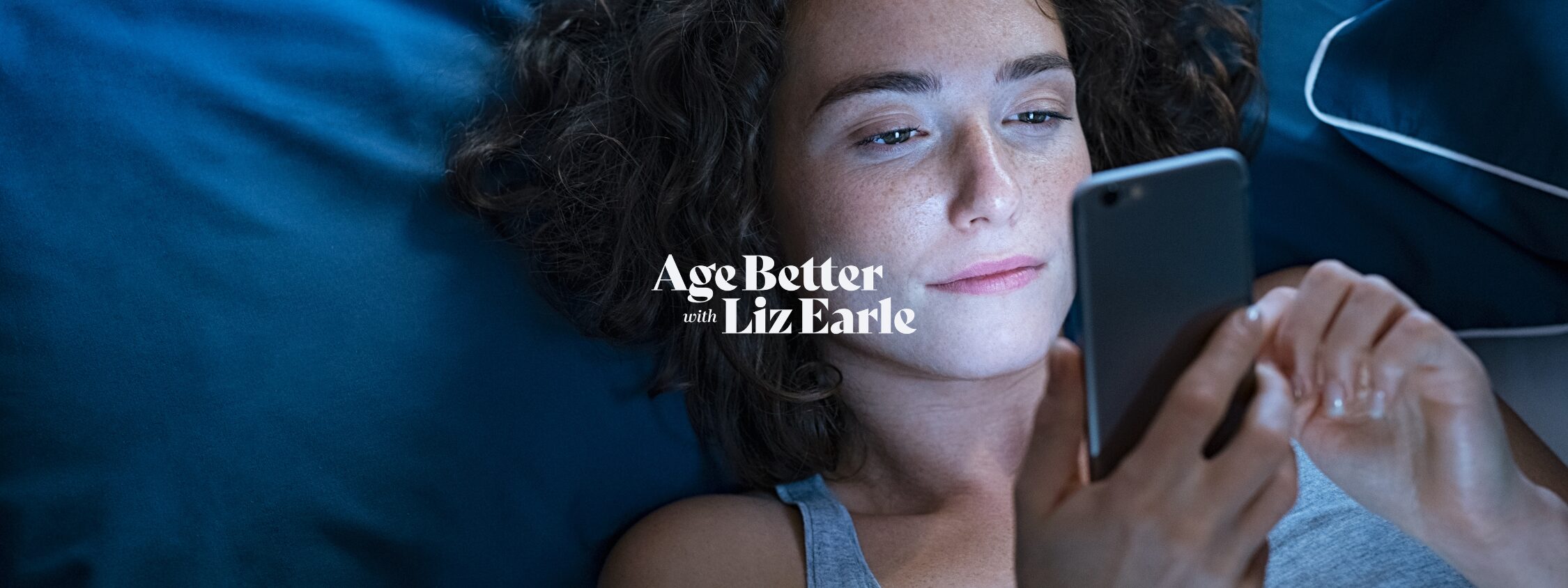
Does blue light affect our sleep? If we reach for our phones first thing in the morning or check emails late at night, the answer may well be yes.
According to Liz in a recent episode of Age Better (below), light exposure (especially at the wrong time of day) is a big disruptor of our sleep-wake cycle.
“5am on your phone? No, no, no,” she says. “You really do want to stop that. You are absolutely disrupting your circadian rhythm with lots of blue light in the middle of the night.”
Here, Liz explains how blue light impacts our sleep, and what we can do to reduce our exposure.
Is blue light from screens wrecking your sleep?
How blue light affects sleep and melatonin
Blue light is part of the visible light spectrum. During daylight hours, it helps to keep us alert and focused.
“Blue light tells the body and brain that it’s time to wake up and do things,” Liz explains.
The problem is timing. When our eyes are exposed to bright blue light very early in the morning (before natural sunrise) or late in the evening, it suppresses melatonin, the hormone that helps us fall and stay asleep.
“Our brain is thinking, ‘Right, I need to be up. I need to be snappy. I need to be on it,’” says Liz. “If you wake early and start scrolling on your phone, that is setting up the wrong rhythm for the whole day.”
Even subtle light from a partner’s screen can interfere.
“Just seeing a hint of that bright blue light under the duvet is going to be impacting you as well,” Liz adds.
Over time, disruption to our circadian rhythm can have a cascade of effects on energy, mood and long-term health.
A simple way to reset your circadian rhythm naturally
If early waking is the issue, the solution is surprisingly simple – get out in natural light.
“The first thing to do is get outside and watch daybreak,” says Liz. “Even that moment before sunrise is incredibly powerful.”
Specialised light-sensitive cells in the retina send signals to the brain that help regulate the timing of melatonin production later in the evening.
“You mustn’t see it through glass,” Liz advises. “Open a window or step outside. Just look towards the light – obviously don’t stare at the sun – but allow that light to reach your eyes.”
This early morning exposure strengthens the internal clock and supports better sleep that night. It’s one of the most effective (and free) ways to improve sleep naturally.
Do blue light blocking glasses work?
Blue light blocking glasses are designed to filter or block high-energy shortwave blue-violet light from digital screens and LED lighting. By reducing the amount of blue light reaching the retina, they lessen the signal telling the brain that it’s daytime.
“That means the brain can calm down and we get a healthier sleep-wake cycle,” says Liz.
They may also reduce eye strain, dryness and screen fatigue. Many designs include anti-glare protection too.
“I bought all my kids blue light blocking glasses a couple of Christmases ago,” Liz adds. “Now when I see them in the evenings, they just put them on automatically. They say, ‘I just feel so much better for it.’”
Liz keeps a pair by her bed, too. “If I wake up and need to check something – let’s live in the real world – at least I’m getting some protection from the screens.”
One brand that Liz likes is Ocushield, which has a range of glasses and screen protectors developed by optometrists. Ocushield lenses are designed to block a high percentage of high-energy blue light. The brand also offers anti-glare screen filters for phones and laptops.
Beyond blue light: how to improve sleep hygiene
While managing blue light exposure is important, there are a number of other ways we can support a good night’s rest.
Liz recommends:
- Keeping the bedroom cool to support deep sleep.
- Making the room as dark as possible. “Melatonin is produced best in a very dark environment,” says Liz. Blackout blinds can help eliminate chinks of light.
- Reducing noise where possible. Soft silicone earplugs can make a significant difference.
- Sticking to a consistent sleep schedule – even at weekends.
“It’s tempting to lie in on a Saturday,” Liz says. “But if you get up at 7am during the week, getting up at 7am on Saturday and Sunday is actually better for your circadian cycle.”