

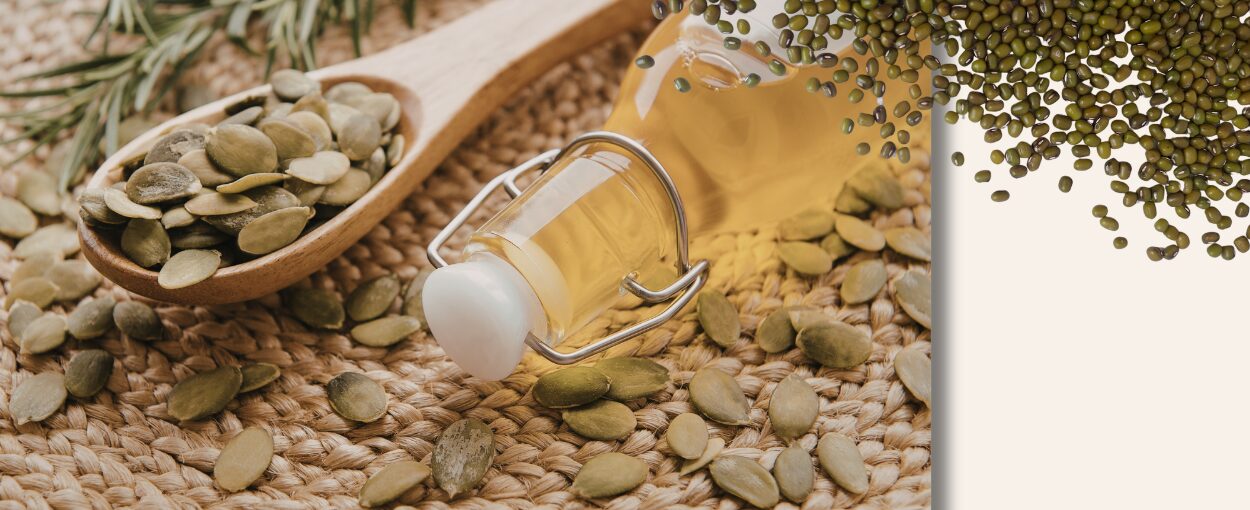
For decades, refined seed oils (such as sunflower, corn and rapeseed) were widely recommended as the healthier alternative to animal fats. But recently, the conversation has shifted.
If you follow health headlines, it can feel like a battle between what’s being said on social media and mainstream science. Yet the reality is far more nuanced. A growing number of researchers are revisiting the evidence behind dietary fat guidelines, and asking whether refined seed oils really deserve their ‘health halo’.
So, are seed oils good for us? Or should we be rethinking how we use them?
Do we need refined seed oils?
Researcher and author Dr Zoë Harcombe PhD, whose specialist area is dietary fats, has spent years analysing the scientific literature.
“Do we need refined seed oils in our diet? The answer is no,” she says. “When I looked at all the scientific evidence in a systematic review, there was no clear proof that they are beneficial. In fact, there’s more than a suspicion that some may be harmful.
“There is no random-control-trial or epidemiological evidence that dietary fat guidelines should have been introduced or should prevail today.”
A bold position, yes, but not an isolated one.
Why are some experts cautious about seed oils?
The omega-6 question
Refined seed oils such as sunflower, safflower, corn and grapeseed oil are high in omega-6 fatty acids. We do need omega-6, but balance is key.
Researchers say that our omega-6 to omega-3 ratio should sit somewhere between 1:1 and 6:1. Today, it’s estimated to be closer to 20:1 in Western diets.
“When omega-6 intake is disproportionately high, it can drive inflammatory pathways,” explains Robert Verkerk, Executive & Scientific Director of the Alliance for Natural Health. “Even if we’re consuming omega-3 fats, if we have too many omega-6 fats in our diet, the body will prioritise the omega-6 pathway. This is not what nature intended.”
Chronic, low-grade inflammation is associated with many modern health issues – from metabolic dysfunction to cognitive decline. This is why this ratio worth paying attention to.
Heat and oxidation
Another concern relates to how these oils behave when heated.
Highly polyunsaturated oils (such as sunflower and corn oil) are chemically less stable. Exposure to heat and light can cause oxidation, producing compounds linked to cellular damage.
“The more polyunsaturated an oil is, the more vulnerable it is to free radical damage,” says Robert. “Monounsaturated fats are generally more stable, while saturated fats are the most resistant to oxidation.
“Without delving too deeply into complex fatty acid science, it’s all about the vulnerability an oil has to oxidation through free radical damage because of the number of unbound carbon atoms in the fat’s ‘backbone’.
“A monounsaturated fat is more stable because there is less carbon available for free radical damage than a polyunsaturated oil.”
In practical terms, oils that remain solid or semi-solid at room temperature – such as butter – tend to tolerate higher cooking temperatures more reliably.
Industrial processing
Most refined seed oils undergo intensive processing, including high-heat extraction, solvent use, bleaching and deodorising.
From a whole-food perspective, this raises questions.
“The first stage of manufacture involves crushing the seeds, heating them to a high temperature (which damages the fat), pressing, then bathing them in a hexane bath or other solvents made from crude petroleum,” Robert explains. “Once the oil is separated, phosphate is added.
“Given the damage done to the oil in step one from the high heat, the oxidised (rancid) oil now needs bleaching to get rid of the odour and bad colour. It’s then subjected to extremely high temperatures, way beyond the smoke points of the oils, to remove the final residues of substances causing the poor colour, taste or odour.”
Many health professionals encourage choosing foods as close to their natural state as possible. Cold-pressed oils, by contrast, are extracted at lower temperatures (below 49°C), helping to preserve flavour and nutritional integrity.
“Cold pressed oils retain their natural flavour, smell and nutritional value,” says Robert. “Although with the exception of highly monounsaturated olive, macadamia and avocado oils and highly saturated coconut oil, they are still a potent source of omega-6 fatty acids – to which we are over-exposed in modern life.
“Maintaining healthy fat handling in the body is as much about consuming undamaged fats as it is about re-establishing a fatty acid ratio akin to the 1:1 we’ve evolved with.”
Are seed oils nutritionally valuable?
Unlike whole foods such as nuts or oily fish, refined seed oils provide calories almost exclusively from fat.
“There’s no protein or mineral content,” says Zoë. “They contain small amounts of fat-soluble vitamins such as E and K, but not vitamins A or D. They also don’t contain essential fats in the form that the body needs them i.e. DHA and EPA.”
“The omega-3 fats include ALA (alpha-linolenic acid), EPA (eicosapentaenoic acid) and DHA (docosahexaenoic acid),” says Lucy Slater, a nutritionist at The Hale Clinic. “DHA is essential for brain function, cognition, and vision, as brain neurons are rich in this fatty acid.
“EPA regulates inflammation, supports cardiovascular health, and plays a role in mental wellbeing. Both EPA and DHA are neuro-protective and are linked to improved mental health, specifically helping reduce symptoms of depression.
“To achieve a healthy balance and lower the omega-6 to omega-3 ratio, increase omega-3. Excellent sources are oily fish: sardines, anchovies, and mackerel. Vegan options include chia seeds, flax seeds and walnuts. It’s a good idea to supplement with a high EPA and DHA omega-3 too. Vegans can supplement with algae oil, such as spirulina.”
What are the best oils for cooking?
Seed oils are often hailed for their convenience. So what else can we cook with?
“We’re better off using foods higher in saturated fat for cooking as they’re stable,” says Zoë. “Grass-fed butter, ghee, coconut oil are mostly saturated fat and best for using at high temperatures.
“The last thing I would use for cooking is any oil that is highly polyunsaturated, because those are the ones that are liquid at room and fridge temperature and more likely to oxidise.
“I generally use grass-fed butter for cooking meat, fish or eggs and extra virgin olive oil for sautéing vegetables (as I find the taste of coconut oil over-powering). Olive oil is more monounsaturated, so it’s more stable than polyunsaturated oils.”