

Liz explains what you need to know about creatine, and why it’s a wonder nutrient for women in midlife and beyond.
For years, I ignored creatine. I saw it firmly in the “sports supplement” box – more for weightlifters, protein shakers and tough-guy locker rooms than women’s wellbeing. Yet this humble, naturally-occurring molecule has burst through into the mainstream space to become one of the most well-researched and useful supplements for women’s health, especially as we age. I’ve become a fan.
So, let’s take a closer look at creatine – what it is, what it does, and why it deserves a place in our wellbeing conversation.
What exactly is creatine?
Creatine is a substance made naturally in the body from three amino acids: arginine, glycine and methionine. We store around 95% of it in our muscles, with the remainder found in the brain and other tissues. Its primary role is simple: to help regenerate energy.
At a cellular level, creatine acts like a rapid-response energy unit. It helps recycle ATP (adenosine triphosphate), the molecule our cells use for energy. When energy demand rises – whether that’s lifting a heavy bag, running for a bus, or supporting brain function under stress – creatine steps in.
We also obtain creatine from food, primarily red meat and fish (there is also a trace amount in Parmesan cheese). However, even meat-eaters often fall short of optimal levels, and women typically consume less creatine than men. Plant-based eating females need to pay close attention here.
Why creatine matters more as we age
From our thirties onwards, we naturally begin to lose muscle mass and strength – a process known as sarcopenia. This accelerates during perimenopause and menopause, influenced by declining oestrogen, changes in insulin sensitivity, and reduced muscle protein synthesis.
Muscle is not just about strength or appearance. It is metabolically active tissue, essential for blood sugar balance, bone strength, balance, longevity and independence later in life. The more we have – the better we age.
Creatine has been shown to:
- Support muscle strength and power
- Improve lean muscle mass, particularly when combined with resistance exercise
- Enhance physical performance and recovery
- Support bone density indirectly, by improving muscle ‘pull’ on bone
For midlife women, this is not about “bulking up” – something creatine won’t unless you’re trying to by hitting the gym daily with heavy training – but it is about preserving strength, vitality and resilience.
Creatine and the female brain
Perhaps the most exciting area of creatine research is emerging not from the gym, but from neuroscience. The brain is an energy-hungry organ. Creatine plays a key role in brain energy metabolism, and research suggests it may support:
- Cognitive function and mental clarity
- Memory and processing speed
- Mood and emotional resilience
Some studies suggest creatine may be particularly beneficial during times of hormonal transition, stress or sleep deprivation – all familiar companions of modern midlife and beyond. There’s also early interest in its potential role in supporting neurological health as we age, potentially Alzheimer’s and dementia.
So, is creatine safe?
Creatine is one of the most extensively studied supplements in the world. When taken at sensible doses, it has an excellent safety profile for healthy adults.
Despite the myths, creatine monohydrate does not appear to damage kidney function in healthy individuals when taken at recommended doses. Confusion often arises because creatine can raise creatinine levels on blood tests, which may make kidney function appear worse than it actually is – even when the kidneys are healthy. Results therefore need to be interpreted in context, as creatinine markers can be mistaken for kidney problems. That said, anyone with existing kidney disease, reduced kidney function, or under medical supervision should consult their healthcare practitioner before supplementing.
How much creatine do we need?
For wellbeing rather than bodybuilding, a daily dose of 3-5 grams of creatine monohydrate is typically sufficient. I take 4g daily in my mid-morning cup of coffee (it’s pretty tasteless). There’s no need for “loading phases” the gym bros sometimes talk about for beginners.
Creatine can be taken at any time of day, with or without food, as it simply tops up what’s naturally in your cells, so no instant effect. Some prefer to take it alongside protein or after exercise as a habit, but consistency matters far more than timing.
Look for:
- Creatine monohydrate (the most researched form)
- No added sweeteners, colours or unnecessary fillers
- A reputable supplier with third-party testing. I like British brands ARTAH and Ancient + Brave for their excellent formulations and high quality.
Will creatine cause weight gain?
Creatine can increase intracellular water in muscle tissue, which may show as a small rise on the scales initially. This is not fat gain – it’s water being pulled into the muscle cell, where it supports function and strength. Many women notice their body composition improves over time, even if the scale doesn’t immediately shift.
Who might benefit most?
Creatine may be particularly helpful for:
- Women in perimenopause and menopause
- Those doing strength or resistance training
- Vegetarians or vegans
- Women under high cognitive or physical stress
- Anyone concerned about age-related muscle or cognitive decline
The bottom line
Creatine is not a fad, nor is it a male-only gym supplement. It’s naturally occurring, well-researched and has profound implications for energy, strength, brain health and healthy ageing. In a world where women are often under-muscled, under-fuelled and overstretched, creatine offers us some evidence-based support. It’s not a magic bullet, but something I really rate as an inexpensive, helpful supplement for whole-body wellbeing.
The creatine supplements Liz loves
ARTAH Essential Creatine
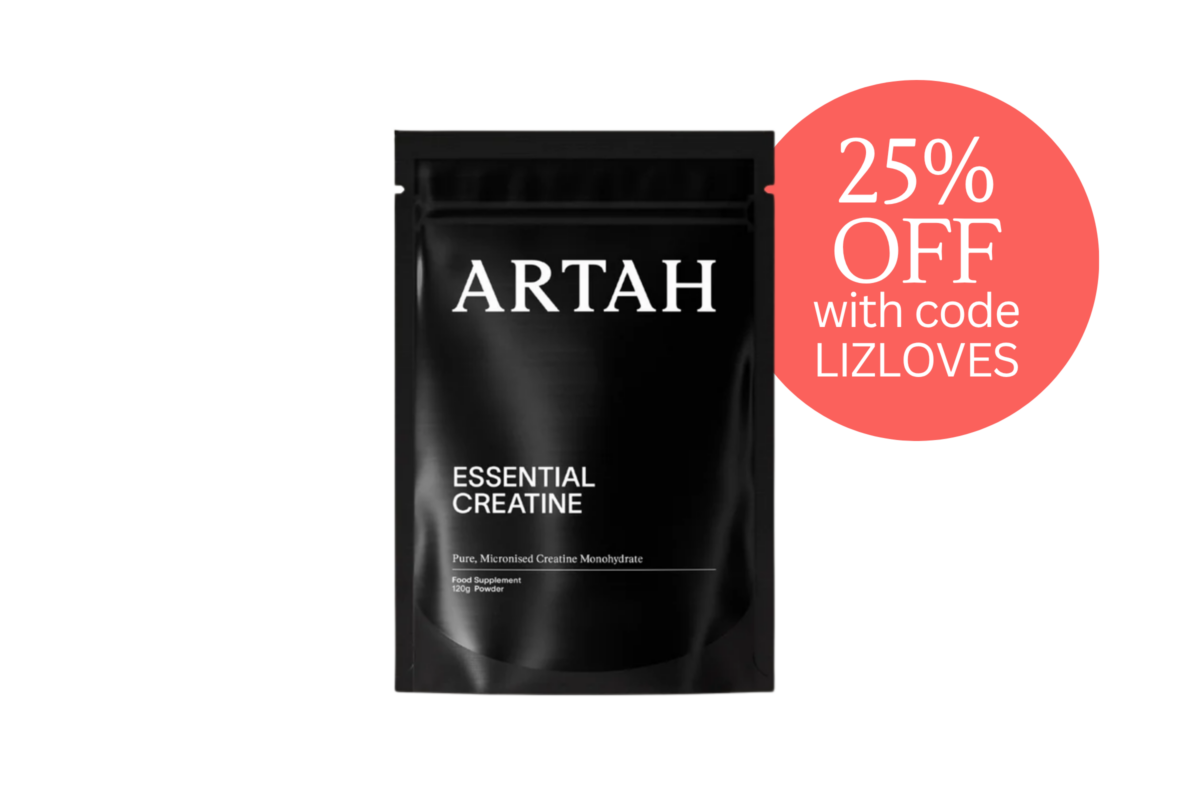
Boost physical performance, energy, and brain function with pure creatine monohydrate powered by Creavitalis®, the most rigorously tested form available. Save 25% with LIZLOVES.
Ancient + Brave True Creatine+

This expertly formulated blend also stars other midlife essentials such as vitamin D, magnesium and taurine. Save 20% with LIZLOVES.
Please note, on some occasions, we earn revenue if you click the links and buy the products, but we never allow this to bias our coverage and always honestly review. For more information please read our Affiliate Policy.