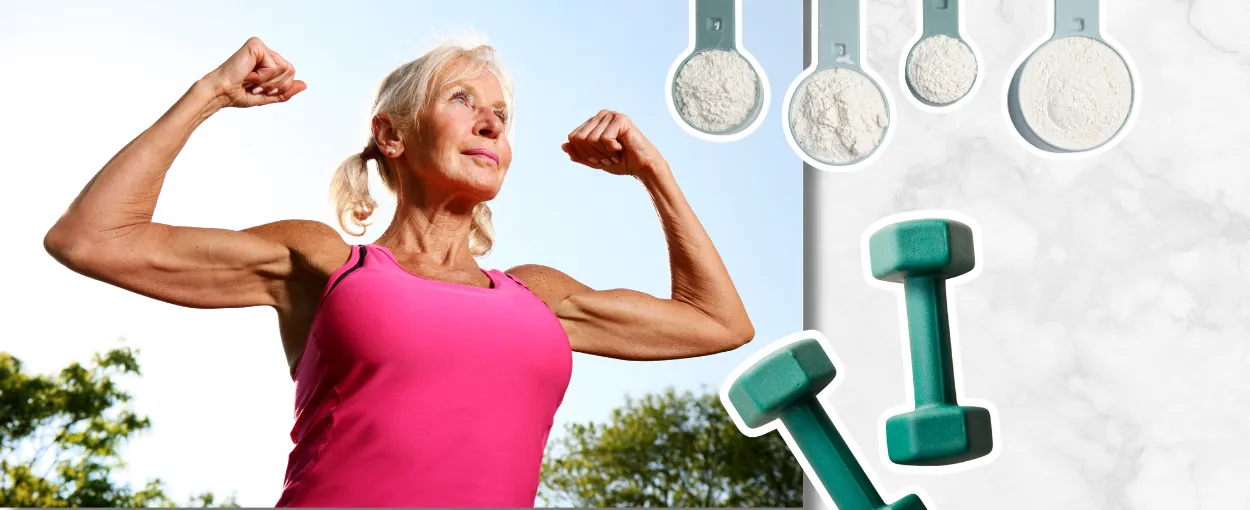
There’s a common misconception that once we reach a certain age, strength training becomes out of reach, or pointless.
But the reality is quite different. Research shows that our muscles can still grow stronger in our 60s — and building that strength can help us preserve our independence for years to come.
And getting started doesn’t mean you need to become a gym regular either. Anyone can start strength training at home, and with a little consistency, you should start to notice a difference in both your energy levels, and in how easy everyday movements feel.
Why your 60s are a great time to start strength training
We naturally tend to lose muscle mass and strength as we age, and the hormonal changes associated with menopause can add to the challenge. But that doesn’t mean physical decline is inevitable.
“Our muscles retain the ability to respond to strength training throughout our lives, regardless of our age,” says personal trainer Carly Corrigall. “Research consistently shows that older adults can make meaningful improvements in muscle strength and physical function through resistance training — including people who have never done this type of training before.”
Take Liz as proof: she started strength training in midlife and hasn’t looked back since. Lifting weights is now a key part of her longevity regime, and she’s a great reminder that you don’t need a lifetime of gym experience to start building strength.
PT Sarah Campus encourages us to challenge our pre-conceived ideas around what strength training is for. “It isn’t simply about looking toned,” she says. “It’s about building a body that supports you through everyday life, whether that’s carrying shopping, climbing stairs, playing with grandchildren or continuing to enjoy the activities you love.”
Any time we spend training our muscles is an investment in our future years: stronger muscles mean a longer muscle span, and more years of living well and moving freely.
Five full-body strength moves to try in your 60s
When building new habits, the key is to start small and find a way of integrating them into your existing routine. For strength training, that might look like practising a few, simple moves consistently, and making them more challenging as your body gets stronger.
“At the start, it’s about working the major muscle groups across the body and introducing different movement patterns,” Carly says.
The five exercises below do just that. Together, they tick off the glutes, hips, upper body, and core, making them a great place to start.
1. Squats
Squats are a great all-rounder, used by everyone from complete beginners to strength training enthusiasts. They work the thighs, glutes and hips, and challenge your core.
How to do it
- Stand with your feet hip- to shoulder-width apart, toes turned slightly out if that’s more comfortable.
- Keeping your chest lifted, bend your knees and push your hips back as though sitting on a chair.
- Lower as far as you comfortably can, keeping your knees broadly in line with your toes.
- Push through your feet to stand back up.
- If you need to, start by sitting down and standing up from a sturdy chair.
“As you get stronger, you can progress to squatting without the chair and eventually holding a weight,” Carly says.
2. Wall press-ups
Press-ups strengthen the chest, shoulders and arms, training the pushing strength we rely on for everyday activities like opening a heavy door. “And while many people assume press-ups are too difficult for beginners, they’re actually very adaptable,” Carly says.
How to do it
- Place your hands flat on a wall or sturdy raised surface, such as a kitchen worktop, with your thumbs in line with your armpit creases.
- Walk your feet backwards until your body forms a straight line from head to heels.
- Keeping your tummy muscles engaged, bend your elbows to lower your chest towards the surface.
- Push through your hands to straighten your arms.
Start against a wall, then gradually moving to a lower surface as you become stronger.
3. Resistance band row
Rows work the upper back, rear shoulders and biceps, which Sarah says “can help with pulling movements, carrying shopping and lifting objects.” Many women also find resistance bands less intimidating than weights.
How to do it:
- Sit on the floor or a sturdy chair with your legs extended in front of you.
- Loop a resistance band around the soles of your feet, holding one end in each hand.
- Sit tall with your shoulders relaxed and arms reaching forwards.
- Bend your elbows and draw them backwards, bringing your hands towards the sides of your waist.
- Gently bring your shoulder blades together as you pull, without shrugging.
- Slowly straighten your arms, keeping control of the band, then repeat.
4. Good mornings
Also known as hip hinges, good mornings work the glutes, hamstrings and muscles supporting the spine. They’re particularly good if you struggle with tight hips.
How to do it
- Stand with your feet hip-width apart and knees slightly bent.
- Place your hands on your hips or across your chest.
- Keeping your back neutral, push your hips backwards as though closing a door behind you with your bottom.
- Let your upper body tip forwards from your hips, keeping your knees softly bent rather than turning it into a squat.
- Lower only as far as you can with control and a comfortable back.
- Push through your feet and bring your hips forwards to return to standing.
5. Calf raises
Lastly, Sarah recommends calf raises, which translate directly into walking, climbing stairs and standing up from the ground. “They also challenge balance and ankle control, both important for maintaining mobility as we age,” she adds.
How to do it
- Stand with your feet hip-width apart, holding the back of a sturdy chair.
- Keep your torso upright and your weight evenly distributed.
- Slowly rise onto the balls of your feet.
- Pause briefly, then lower your heels with control, avoiding bouncing or gripping the support too tightly.
Start small and build from there
Your 60s aren’t a deadline for getting strong, but they could be the perfect time to begin. Pick two or three of these moves, practise them a couple of times a week and make them slightly harder as they start to feel easier. This might mean doing more reps, or adding more weight with a pair of dumbbells.
Little and often really does add up — your future self will thank you.