

Recent talk in the health sphere has highlighted just how important our muscles are. From reaching for a mug in the cupboard to getting up from a chair, turning to reverse the car, or simply walking with ease, they support almost every movement we make.
This is exactly why improving our muscle span should be a top priority as we age. Muscle span refers to the amount of time our muscles stay strong and fully functioning for. Over time, factors such as age, inactivity, stress and even poor posture can affect this.
The good news is, we can support healthy muscle span as we age, and it doesn’t have to be overly complicated. Simple, consistent lifestyle habits make the biggest difference.
What is muscle span — and why does it matter?
Personal trainer Carly Corrigall describes muscle span as “the muscular equivalent of our health span — the years we’re able to live well, move freely and stay independent.”
Muscle span matters because our muscles do far more than help us lift, carry or exercise. They support balance and stability, protect our joints, help regulate blood sugar, and play an important role in bone health. Strong, well-functioning muscles are also linked with better energy, resilience and recovery.
In short, our muscles matter. And when we make muscle span a priority, we can age more healthily.
“I like to describe it to my clients like paying into a biological pension pot,” Carly summarises. “The more muscle we can build and bank now, the better it is for our long-term health, happiness and independence.”
Why muscle spans matters for women in midlife
It’s never too early to start prioritising muscle span. Our muscle mass starts to decline from our 30s onwards, so the earlier we start to think about the longevity of our muscles, the better.
That said, muscle span becomes even more important for women in midlife. “Loss of muscle mass speeds up dramatically in the perimenopause and menopause years, because of the drop off in our sex hormones, particularly oestrogen and testosterone,” Carly explains.
This hormonal shift can affect many things, from strength and recovery to energy and body composition, making it easier to lose muscle and harder to rebuild it. The result may show up as feeling weaker, less stable, or more prone to aches and stiffness — even when we’re still active.
“Midlife is a crucial intervention window,” says Schella Fowler, fitness instructor and founder of Fabulous50s. “When women focus on maintaining and rebuilding muscle during this phase, they dramatically change their physical and mental trajectory for later life.”
This stage of life can be a powerful turning point — a chance to future-proof our strength, confidence and independence.
Simple ways to support muscle span
The good news? We don’t need to overhaul our life to protect our muscles. Small, consistent habits can make a powerful difference over time.
Strength training
Strength training is one of the most effective ways to maintain and build muscle at any age. It also supports bone density, balance and metabolic health, making it a cornerstone of healthy ageing.
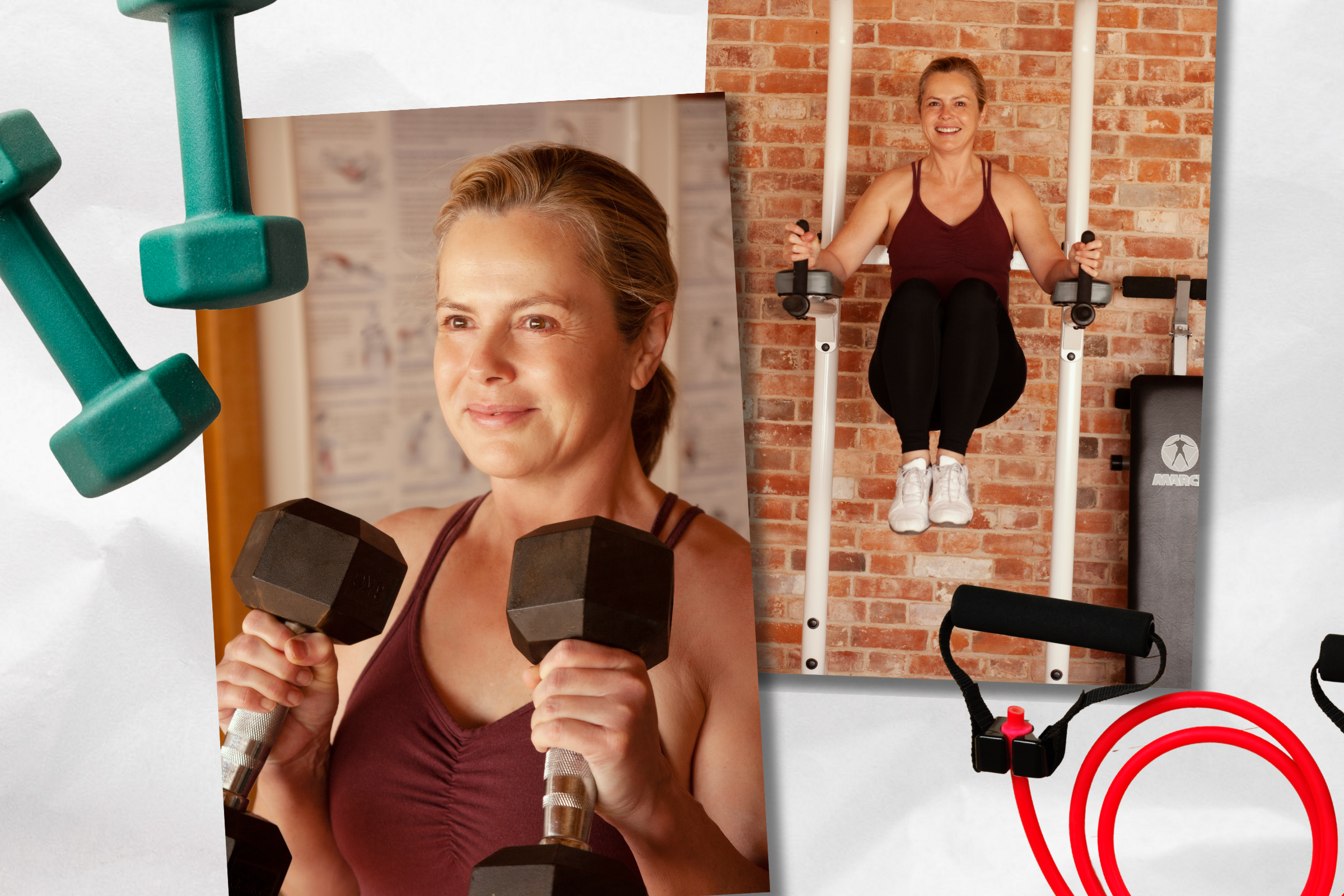
“I’d aim to do some form of resistance training two to three times a week,” Carly advises. “That could be dumbbells, resistance bands or simple bodyweight exercises, focusing on big, functional movements like squats, lunges, pushing, pulling and carrying. These give you the biggest bang for your buck.”
If you’re new to this type of movement, start gently and build up. “Even 10 minutes is enough to build momentum, confidence, and consistency,” Schella says.
Jump training
Power — the ability to move quickly and react — is just as important as strength. This declines with age, but it plays a crucial role in preventing falls and injuries.
Jump (or plyometric) training can sound daunting, but it doesn’t have to be. “Hopping on one leg, little jumps on the spot or even moving quickly from a squat and popping up onto your toes also counts,” says Carly. “This will build power in the muscle and stimulate the fast-twitch muscle fibres, which are the ones we rely on to react quickly to prevent trips and falls.”
If high-impact exercise doesn’t feel right, quick sit-to-stand movements or stepping drills can offer similar benefits.
Protein
Protein provides the building blocks our muscles need to repair and grow. Try to include a source of protein at each meal — such as eggs, yoghurt, fish, tofu, beans or nuts — to support muscle maintenance.
Increasing your protein intake even slightly can make a difference, and there are many ways to do it. Spreading intake across the day also seems to be more effective than relying on one larger serving at dinner.
Rest
Muscle is built during recovery, as well as during exercise. “Sleep, gentle stretching, and rest days allow muscles to adapt and grow,” Schellea explains. “When women feel safe to start, consistency follows, and consistency is what creates long-term results.”
Prioritise rest and, if you can, try to minimise stress. A constant undercurrent of stress in our bodies is one of the biggest causes of inflammation, which makes maintaining muscle much harder.
Move more
If we’re only exercising for one portion of the day and sitting down for the rest of it, our muscles aren’t going to get the energy they need. Walking, carrying shopping, climbing stairs and gardening all contribute to maintaining strength and mobility.
Try and find small opportunities to move more throughout the day. Over time, these habits will start to feel like a natural part of daily life — which is exactly what helps them stick.
It’s never too late to start building strength
Whatever stage of life you’re at, your muscles are remarkably adaptable. Anyone can start to look after their muscle span — the key is simply to begin, and to keep going. Small, consistent steps really do add up.