
Tight hips are one of those sneaky midlife complaints many of us dismiss as ‘just getting older’. A little stiffness here, a pinch of soreness there – nothing out of the ordinary, right?
But our hips are far more than hinges for walking. When they’re tight, weak or neglected, the effects can ripple across the whole body, contributing to back pain, poor posture, and even pelvic floor problems. And if you’ve recently decided to return to exercise or you’re trying strength training for the first time, then first of all – good on you. But, your hips could be the secret stumbling block making things harder than they need to be.
While we’re busy stretching our hamstrings or foam rolling our calves, the hips are often left out of the conversation. Experts in physiotherapy and women’s health say it’s time that changed.
Why midlife hips get tight (and why it’s not your fault)
Modern life does our hips few favours. Hours at desks, long car journeys, evenings on the sofa – sitting literally shortens the hip flexors, leaving them weaker and less mobile over time. Add in the hormonal shifts of midlife, and it’s a recipe for creakiness.
“Menopause and sedentary lifestyles are the key contributing factors to hip flexor tightness,” says Molly Ruecker, a sports physical therapist at Muscle Booster. “On top of this, many women are unaware of the importance of building lower-body strength, which plays a key role in preventing tightness, supporting mobility, and reducing discomfort over time.”
In other words, it’s not laziness or bad luck. It’s the combined effect of a modern lifestyle and midlife biology colliding.
The ripple effect: how tight hips impact more than we realise
The trouble with tight hips is that they rarely stay a ‘hip-only’ issue. As the hips lose mobility, other parts of the body step in to make up the difference, often in ways that aren’t very kind to our joints.
Back pain and posture
When hip flexors shorten, they tug the pelvis forward, straining the lower back. Over time, this can alter posture and lead to that familiar ache after long periods of standing.
“Poor hip mobility places additional strain on both the lower back and the knees,” Molly confirms. “In the long term, this can make even simple tasks like walking painful.”
Pelvic floor connection
The hips and pelvis are inseparable partners. Stiff or weak hips reduce pelvic stability, which can have knock-on effects for the pelvic floor – an area already under pressure during and after menopause.
Fitness frustration
Tight hips don’t just make daily life harder; they also hold us back in exercise. Squats, lunges, and even Pilates roll-downs all rely on fluid hip movement. Without it, workouts can feel clunky, uncomfortable, or even risk injury.
Hormones, menopause, and the midlife hip shift
Menopause brings its own challenges for our muscles and joints. Falling oestrogen levels affect collagen production and joint lubrication, leaving us stiffer and slower to respond than we’d like.
“As oestrogen declines, muscle stiffness and discomfort become more common,” Molly notes. “And with so many tendons, ligaments and muscles surrounding the joint, the hip is often one of the first places to suffer.”
Research backs this up: a recent study found that 70% of women will experience musculoskeletal symptoms during menopause, and 25% will find them debilitating. Put simply, low levels of oestrogen and testosterone cause stiffness. Add in years of sitting, and the result can feel like hips that have silently rusted shut.
For this reason, some studies show that taking HRT can reduce joint pain and stiffness, and even reduce the risk of developing osteoarthritis.
Simple strategies to unlock your hips
The good news in all of this is that the hips are (thankfully) responsive to change. Small, consistent tweaks to daily movement can make a real difference.
Stretch smart, not just long
Endless hamstring stretches are great, but they won’t solve hip issues. Instead, experts like personal trainer Carly Corrigall recommend focusing on moves that directly open the hip flexors and encourage rotation.
“If we’re mostly moving our hips in a forwards and backwards motion all day long – sitting, standing, even walking or jogging – the hip joint becomes very good at that action, but rusty at others like rotation,” she points out. “It really is the case that if we don’t use it, we lose it, so I always recommend exercises that take the hip joint through a full range of motion.”
Strength matters
There are so many reasons to start strength training in midlife, and reducing hip stiffness is one of them. Opening the hips through targeted mobility is only half the story; supporting them with strength is just as important.
Strong glutes and core muscles stabilise the pelvis, which help reduce the strain on our hips. You’ll quickly notice a difference in how tight your hips feel if you start strength training regularly.
Everyday fixes
Even outside the gym, small habits help. Standing up more often, shifting position regularly, or taking a short walk after sitting all keep blood and nutrients flowing.
“Sitting down for long periods of time allows the hip flexors and surrounding muscles to become inactive,” Molly says. “That’s why it’s so important to open up the hips as often as possible.”
Expert-approved moves to try at home
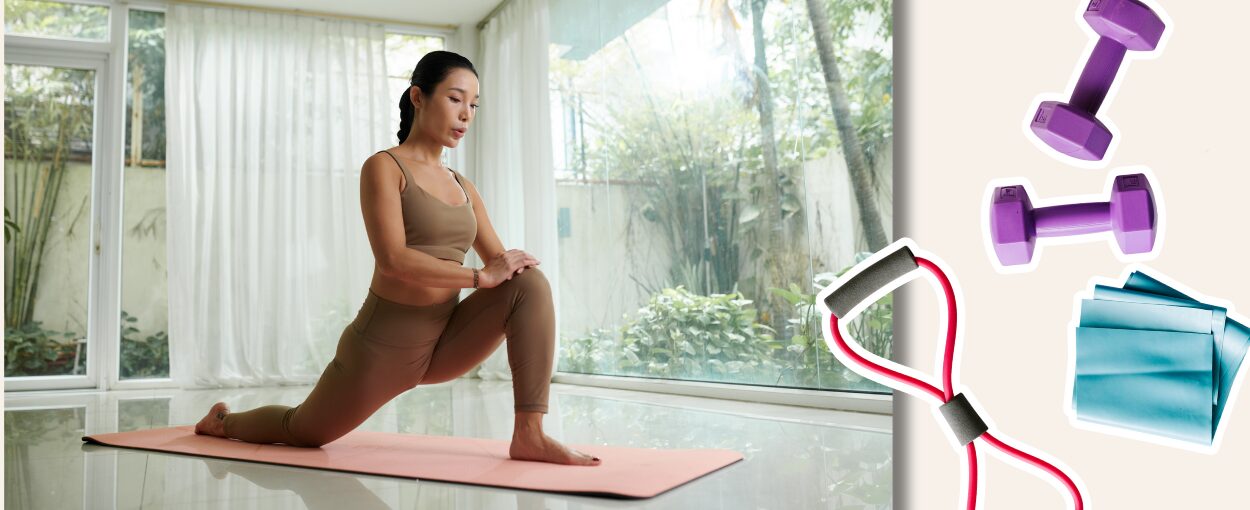
Here’s a simple toolkit of mobility moves from our experts — no equipment needed. These moves are great for ‘exercise snacking’, as they can be easily weaved into your day.
These exercises are intended as a general guide. If you have any injuries or pre-existing conditions, please consult your healthcare provider before beginning a new exercise regime.
Standing hip circles
Stand on one leg, lift the other knee to hip height and open the knee to the side and then to the back, slowly drawing big circles with it, forward and backwards. Use a wall or the back of a sturdy chair for support if needed.
Sumo squats
Stand with your feet wide, toes turned out. Push your hips back, bend your knees and sink as low as feels comfortable, keeping knees tracking over toes. Drive back to standing, chest tall, head lifted.
“Go as slow as you can with this one and focus on the quality of the exercise, rather than using the up and down momentum to power through,” Carly advises.
90:90s
Sit on the floor, knees bent, feet flat, hands behind you on the floor for support. Drop both knees slowly to one side, keeping the knees bent. Pause, then switch, taking the knees to the other side, in a windscreen wiper-like action.
“Move with control rather than letting the knees flop,” Carly adds. “You might want to pause at the points where the movement feels a little sticky. See if you can breathe and let go a little more.”
Consistency is key, not perfection. A few minutes each day is enough to start undoing years of stiffness. And the payoff? Easier movement, better workouts, and hips that feel freer and stronger.