
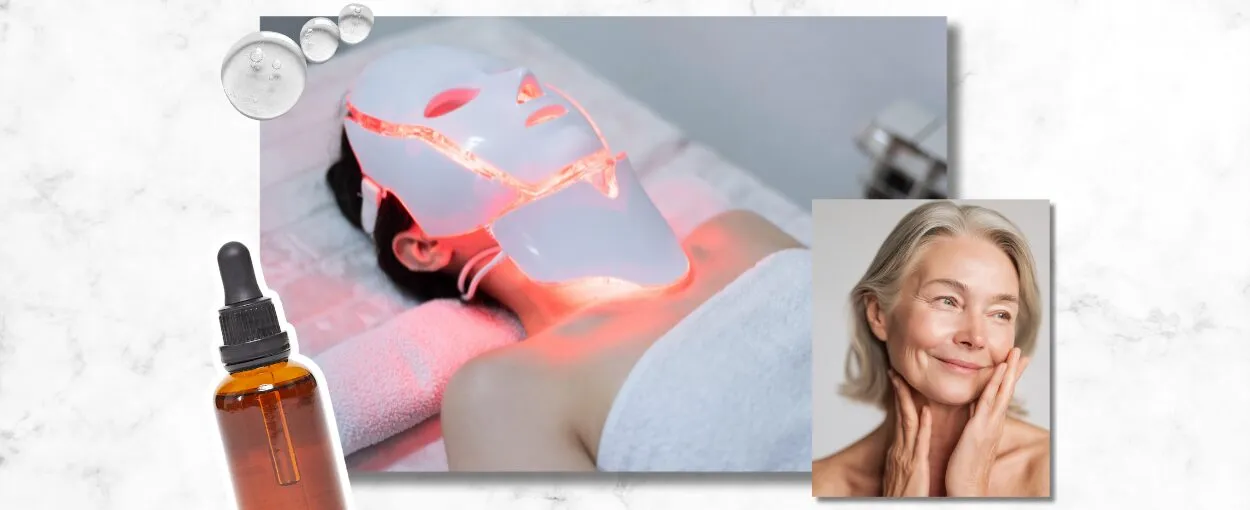
We’ve come a long way since clay face packs and cucumber slices over the eyes. After sheet masks came serums, and now beauty technology has brought LED light treatments into our bedrooms. We can lie back on our beds, click a button, and emerge glowing – albeit looking a little like Iron Man in the process – all in the name of clinical-style results at home.
But a recent BBC report revealed that the Advertising Standards Authority has banned several adverts for LED face masks, citing misleading claims around treating skin conditions such as acne and rosacea. The news has prompted an obvious question: how safe are these futuristic devices really – and do we fully understand what we’re putting on our skin?
What is LED light therapy?
Before investing in the face mask you’ve seen all over Instagram, it’s worth understanding what LED light therapy actually is. LED – short for light-emitting diode – therapy is a non-invasive treatment that uses specific wavelengths of light to penetrate the skin at varying depths.
In clinical settings, dermatologists have long used LED devices to help support skin healing and address concerns including acne, inflammation and signs of ageing. Different colours of light are thought to trigger different responses within the skin, from encouraging collagen production to calming breakouts.
What’s changed is access. Once confined to clinics, LED technology is now available for home use – promising professional-style results without the appointment.
Are LED face masks safe to use?
Despite recent recalls, banned adverts and wider questions around regulation within the beauty industry, current clinical evidence suggests that LED face masks are generally safe when used correctly. A growing body of research supports the use of LED light therapy in dermatology, particularly for skin rejuvenation.
One clinical study found that LED and near-infrared (IRED) phototherapies at wavelengths of 630nm and 850nm respectively were effective, well-tolerated and painless, with no adverse side effects reported when used appropriately.
That said, not all devices on the market are created equal. Sue D’Arcy, founder and CEO of LED industry leader iSMART, urges consumers to remain discerning when considering at-home devices. She warns that misleading marketing has clouded the category for years.
“Unregulated, unverified LED masks are flooding the market, and consumers deserve clarity,” she says. “Devices that claim to ‘treat’ medical conditions must meet strict regulatory and clinical standards. Anything less is misleading – and potentially unsafe.”
Check the dosage
When it comes to LED face masks, more is not necessarily better. Sue advises caution around products that boast extra wavelengths or higher intensities without clinical data to support those claims.
“Some consumers believe that more powerful light is always better, but that’s not the case,” she explains. “Higher intensity can actually inhibit cellular responses rather than promote them.”
Used correctly, LED therapy works by delivering light at specific wavelengths and intensities designed to support the skin’s natural processes – not overwhelm them.
Understand colours and claims
Red, blue and near-infrared light all sound suitably futuristic, but what do they actually do? When it comes to LED face masks, it’s not about collecting colours like a skincare rainbow, but choosing the right wavelength for your skin’s needs.
Blue light, typically around 415nm, is best known for its ability to target acne-causing bacteria. But as D’Arcy points out, it’s worth being wary of masks that claim to treat acne outright – acne is a medical condition, and any device making treatment claims must meet strict regulatory and clinical standards.
For those concerned with signs of ageing, red light (around 630nm) is the most widely studied. It’s associated with reducing inflammation, supporting collagen production and softening the appearance of wrinkles and age spots. Pairing red light with near-infrared wavelengths (830nm) may enhance results further, thanks to its ability to penetrate deeper into the skin and calm inflammation.
There’s also growing interest in 1070nm light – the deepest-penetrating wavelength currently FDA-cleared for tissue healing. But that doesn’t mean you need a mask that boasts every colour under the sun. The most effective devices are targeted, evidence-based, and matched to your specific skin concerns.
How to choose an LED face mask
After all the research and science, a little common sense still goes a long way. If a device promises instant results or claims to fix everything from acne to ageing overnight, it’s worth taking a step back.
First, check that a product complies with safety regulations, for example that it’s UKCA or FDA approved.
Where you buy matters too. Purchasing from reputable retailers helps ensure devices meet legal standards and offers protection should anything go wrong. Established brands with a track record in LED light therapy, such as Sunlighten and Omnilux, are often viewed as safer bets – not because they promise miracles, but because their claims are backed by clinical data and regulatory compliance.
I used an LED face mask and this is what I honestly thought…
As someone with pale, freckle-covered Irish skin, I only need 10 minutes in the sunshine to turn lobster red. Skin safety has always been non-negotiable for me. Now in my forties, my complexion is changing too — thinner, less elastic, with fine lines appearing where they once didn’t. I was looking for something that felt both gentle and effective.
I decided to try the Lustre Clearskin Renew Pro Facewear Mask (£450). It’s app-controlled, straightforward to use, and the sessions last just ten minutes — a beauty routine I could realistically stick to. I also appreciated that the brand’s messaging focused on skin health and radiance, rather than aggressively pushing anti-ageing promises.
The accompanying app allows you to target specific areas of the face. This made the treatment feel personalised rather than one-size-fits-all. That said, while the mask has integrated eye protection, I didn’t feel entirely comfortable relying on it alone. I made sure to keep my eyes firmly closed during each session — a reminder that comfort and perceived safety can vary from user to user.
The mask uses a combination of red, blue and IRED light, designed to support a clearer, more radiant complexion. Once the 10 minutes are up, the device switches off automatically and you can continue with your usual serums and creams.
After a few weeks of consistent use, I’ve noticed an improvement in overall skin tone and a subtle softening of the fine lines around my eyes. It’s certainly not a miracle cure, nor does it promise to be, but it does appear to deliver on its core claims. With slightly more reassurance around eye protection, it would feel like a more confident long-term addition to my routine.
LED face masks, loved by Liz Earle Wellbeing
Sunlighten RED Light Therapy Mask

The Sunlighten RED Light Therapy Mask delivers 880nm near-infrared light, along with blue, green and yellow light to help rejuvenate skin and target fine lines. Save 10% with the code LIZLOVES.
BON CHARGE Red Light Face Mask

Uses red and near-infrared light to support collagen production and improve skin firmness in just 10 minutes a day. Click here to save 15%.
HigherDOSE Red Light Face Mask

This mask combines advanced LED technology with a flexible, comfortable fit. Cordless and portable, it makes elevating your skincare routine a breeze. Click here to save 15%.
Please note, on some occasions, we earn revenue if you click the links and buy the products, but we never allow this to bias our coverage and always honestly review. For more information please read our Affiliate Policy.