
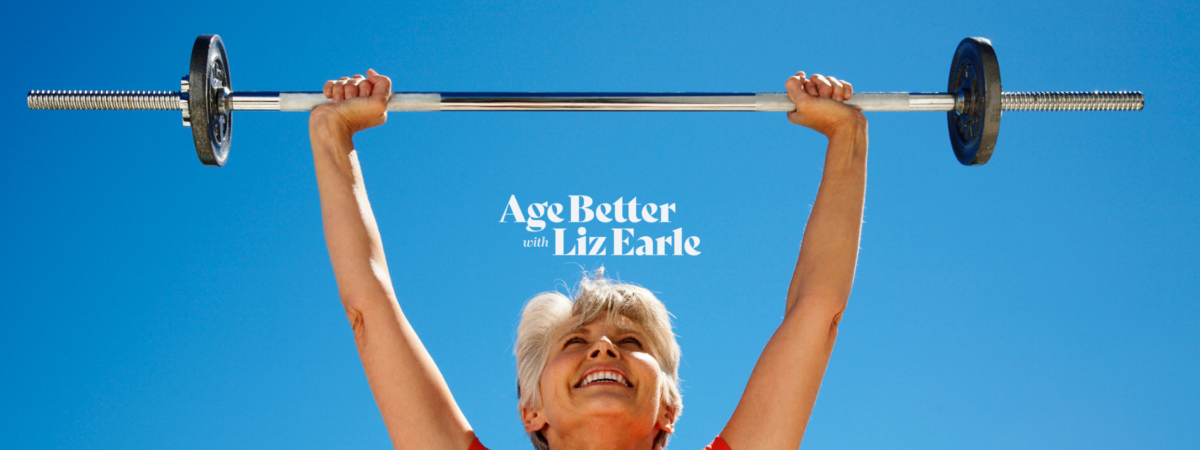
Nothing supports your muscles, metabolism and mood in midlife quite like exercise. Personal trainer Kate Rowe-Ham, founder of Owning Your Menopause, joins Liz to talk about the power of strength training – and how to build your own habits.
In this episode, Liz and Kate discuss the changes that happen to our bodies after the age of 30 and the symptoms of menopause that can be supported by lifting weights.
Kate also reveals the surprising mental-health benefits of movement – and gives tips on starting small and finding what works for you.
Stream the episode below, or download the recording via Apple Podcasts or Spotify.
3 easy ways to build muscle after 40
After the age of 35, we lose 3-5% of our muscle mass per year – and as oestrogen declines through perimenopause, that process speeds up. The good news? It’s completely reversible. “Strength is really the issue when it comes to health for a strong, robust and resilient body,” says personal trainer and menopause fitness specialist Kate Rowe-Ham. Here are three habits she wants every midlife woman to start with.
Add resistance to what you’re already doing
You don’t need a gym membership to start building muscle. Kate’s advice is to work with what you’ve got. Wear wrist and ankle weights on your daily walk. Try a weighted vest around the house – you’re adding resistance every time you stand up or sit down.
“We don’t need to overcomplicate it,” she says. Even bodyweight squats count. Kate recommends 10 squats on the hour, every hour.
“That’s what’s going to get you up and down from the sofa. That’s what’s going to get you in and out of your car.”
Work on your grip strength
Grip strength is one of the best predictors of how well we’ll function as we age – think opening jars, carrying bags, getting up off the floor. Kate recommends the farmer’s carry: hold a dumbbell or kettlebell in each hand, arms by your sides, chest high, and walk for 30–60 seconds. Aim for around 70% of your body weight split evenly between both hands. No weights? Use heavy shopping bags or water bottles to start.
Eat enough – especially protein
“So many people I work with don’t eat enough food,” says Kate. “That’s the bottom line.” If you’re exercising but under-eating, your body physically can’t build muscle.
Kate prioritises protein and fibre at every meal. She also champions carbohydrates – “Not all carbs are created equal, so it’s about choosing the right ones rather than restricting.” Think quinoa over white rice, colourful vegetables on every plate.
Why strength training matters in midlife
The benefits go well beyond muscle. Kate says regular strength training can help with hot flushes, joint pain, anxiety, low mood, sleep and blood sugar balance. “I think every symptom will somehow be improved through exercise,” she says. The more muscle you build, the better your body regulates glucose – which helps with the fatigue and mood swings so many women experience in perimenopause.
The key is to start where you are, keep the goal small, and not compare yourself to anyone else. “You’ve just got to start,” says Kate. “When you find what works for you, it’s so unbelievably powerful.”
Also in this episode:
- Shocking stats on muscle decline and bone density as we age
- The impact of exercise on our mental health
- GLP-1 jabs and why strong is better than skinny
- Building confidence, capability and independence
- How you’re probably not eating enough
- Keeping it simple – start small and find what works for you
Links mentioned in the episode:
- Vitamin D3 with K2
- Omega-3
- Collagen
- Protein
- Fibre
- Creatine
- Magnesium
- MCT oil
- Ankle and wrist weights
More from Kate:
Get in touch with a question for Liz:
- Email: [email protected]
- WhatsApp: 07518 471 846
More from Liz:
- Preorder Liz’s new book – How to Age
- A Better Second Half
- Follow Liz on Instagram
- Follow Liz Earle Wellbeing on Instagram
Some links may be affiliate links, which help support the show at no extra cost to you. Read our Affiliate Policy for more information.