
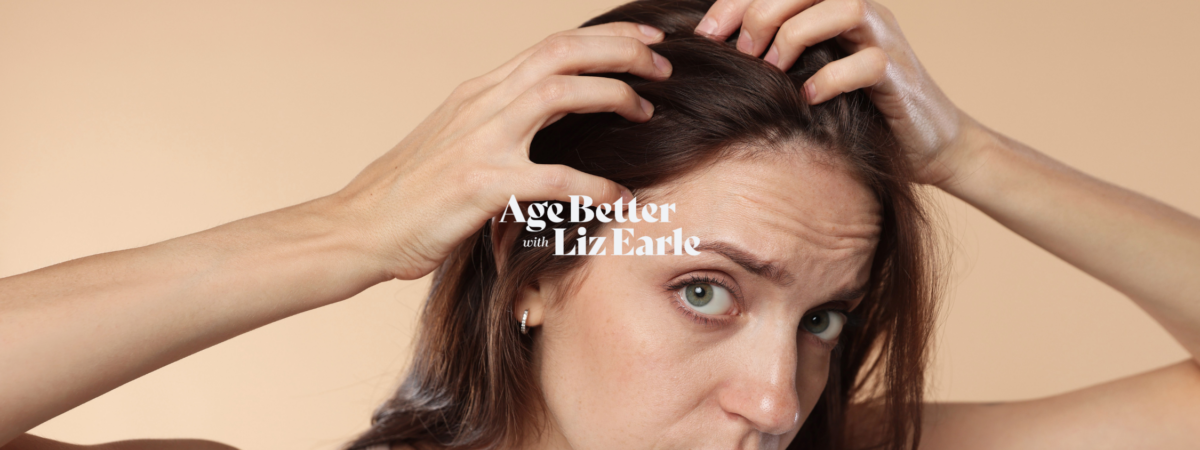
If you’ve noticed your hair has lost its lustre, or you’re struggling to style it, your hormones could be the culprit. Celebrity hairstylist, Gustav Fouché, joins Liz to explain what happens to our hair during midlife – and how to bring life back to your locks.
They discuss why scalp care is as important as skincare, and the hero ingredients we should be eating – and using – for healthy hair growth.
Gustav also shares the trending styles and colours for 2026, with tips on finding a cut and colour that works for you.
Stream the episode below, or download the recording via Apple Podcasts or Spotify.
What happens to your hair during midlife (and what to do about it)
During perimenopause and menopause, hormonal fluctuations can often show up in your hair and scalp. Reduced collagen production and fewer natural oils can cause itching and flakiness, while declining oestrogen can lead to thinning and hair loss.
The good news is, a little TLC can make a big difference. “If you want to keep your hair, then look after the scalp,” explains renowned midlife hair specialist Gustav Fouché. “Let’s treat it now to make sure that by the time we get to 60 or 70, the quality is fantastic.”
Here are his tips for ensuring better hair days.
Treat scalp care like skincare
Regular cleansing is important, as our scalp can react to exposure to toxins (public transport, chlorinated water, harsh products), just as our complexion would. Gustav recommends washing hair every two to three days unless it’s very dry.
Like the skin on our faces, heat and harsh ingredients can damage the scalp, so let hair dry naturally when you can. Gustav also advises watching out for harsh products that contain oil-stripping sulphates and silicones, which coat the hair and create build-up.
Fuel your follicles
An unhealthy scalp can often be a sign of nutritional deficiencies.
“Hair is a non-vital organ,” explains Gustav. “So all of our nutrition goes to our heart, our kidneys, our lungs – and then whatever’s left will go to our hair and scalp.”
Overly strict diets and restricted eating can deprive hair of the fuel it needs, so those taking GLP-1 medications need to keep an eye on their nutritional intake.
Hair is 80%–90% keratin, a protein that adds strength, elasticity and shine, so fill your plate with protein, as well as omega-3s to reduce inflammation (think meat, dairy, oily fish). Thinning and hair loss is often down to low levels of vitamins B12 and B9, so if you’re plant-based, good-quality supplements can help. Gustav also rates taking collagen to support keratin production.
“Hair is never a quick fix,” says Gustav. “The two most important things are patience and consistency.”
How to choose a midlife cut and colour
Pick a colour that matches your skin tone
Soft, warm hair colours are usually more flattering. Gustav talks about the current trend for ‘leather hair’.
“It’s a mid-range brownie gold,” he says. “It’s not red, but has golden undertones.” He advises blondes to swap ageing ashy grey tones for buttery, creamier shades that are softer on the skin.
Thinking of embracing the grey? Work out what type of grey you’ll have before committing, so it doesn’t leave you looking washed out. “A lot of people are actually quite tobacco, or steely gunmetal. So on the skin tone, it’s really harsh,” says Gustav.
Short or long?
If you like to stay current, Gustav says short styles like the pixie cut and textured bobs are popular this year. But trends come and go, and he believes long hair will soon be back. He is also a fan of the ‘facelift fringe’ if your face shape and hair texture suits it. “A fringe can do wonders to bring a bit of youth back in.”
Hair extensions can work well for adding length or volume if you’re ready for the commitment. “Hair extensions are as good or bad as the person applying them and the person looking after them,” explains Gustav. You’ll need to take care with brushing and washing, and regular return visits to the salon are essential for maintenance.
“When it comes to haircutting,” says Gustav, “I always say to people, the best thing to do is to look at your face shape.” A haircut that enhances your features, he says, will outlast any trend.
Also in this episode
- How hormone fluctuations change your hair and scalp
- The truth about GLP-1 jabs and hair loss
- Why eyebrow microblading impacts your hair colour
- Are hair extensions worth it?
- The ingredients your hair is hungry for
- Your next cut: trending styles for 2026
Links mentioned in the episode:
More from Gustav:
Get in touch with a question for Liz:
- Email: [email protected]
- WhatsApp: 07518 471 846
More from Liz:
- Preorder Liz’s new book – How to Age
- A Better Second Half
- Follow Liz on Instagram
- Follow Liz Earle Wellbeing on Instagram
Some links may be affiliate links, which help support the show at no extra cost to you. Read our Affiliate Policy for more information.