
Ask anyone over the age of 35 about their skincare routine and chances are they’ve become a little collagen-curious and heavy on the hyaluronic acid. But, no matter how advanced our topical products are, they can’t quite compete with an inside-out approach.
“Skin reflects what’s happening internally,” says nutritional therapist Gabriela Peacock. “If we want to slow skin ageing, we have to think beyond topical products and focus on cellular health.”
For Gabriela, it’s about consistently nourishing the body with foods that protect and repair from within.
“That’s true skin longevity,” she says.
The fundamentals of skin health
Registered nutritionist Charlotte Faure Green agrees, adding that her approach may not sound glamorous, but it works.
“It’s consistency, blood sugar stability and ‘barrier basics’,” she explains. For Charlotte, that means adequate omega-3, vitamin C and zinc, alongside plenty of colour and fibre to support gut health. “Skin rarely thrives on under-fuelling, high stress and ultra-processed foods. While the best skincare can go a long way, the baseline needs to be solid.”
Nutritional therapist Maz Packham also believes diet can have a powerful influence on skin health. “If we eat in a supportive way – with plenty of antioxidants, good-quality protein, healthy fats and water – we can positively impact collagen production and cellular repair, helping to slow the biological processes that contribute to visible signs of ageing,” she says.
By contrast, regular consumption of refined sugar, ultra-processed foods and alcohol may accelerate those processes.
So what’s one of the most effective places to start?
“Focus on an array of colourful vegetables and fruits,” says Maz. “Different colours contain different compounds that help neutralise free radicals, reducing oxidative stress in the body that contributes to signs of ageing such as fine lines and pigmentation.”
9 of the best foods for slow skin ageing
Load up on leafy greens
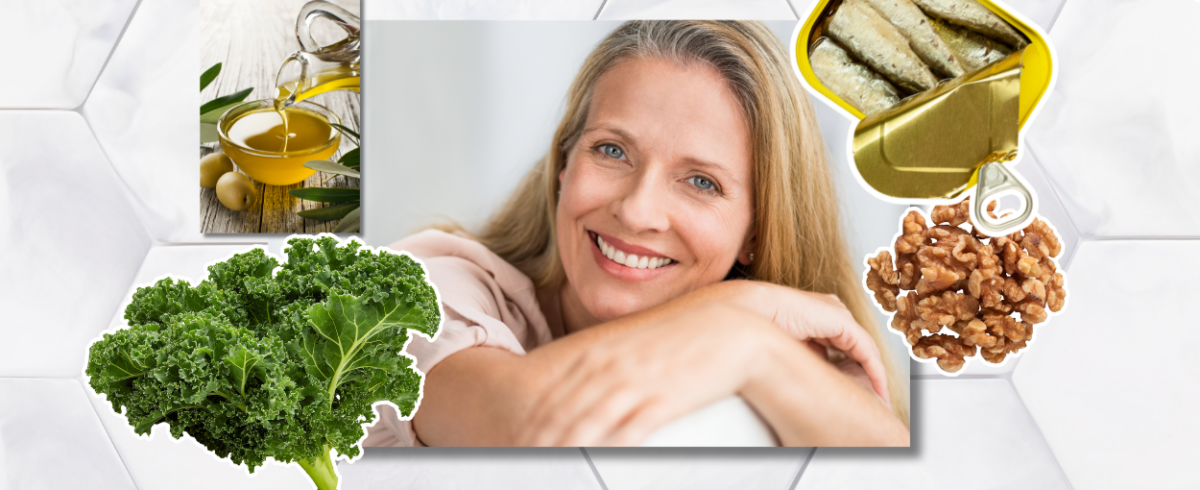
Leafy greens, such as spinach and kale, have had something of a nutritional glow-up. Long gone are the green juices of circa 2010; now they’re giving main-character energy when it comes to boosting our daily fibre intake. We know they’re brilliant for gut health, but getting plenty of roughage can also help shield our skin from UV, environmental and even stress-related damage.
According to Gabriela, leafy greens provide vitamins A and C to support skin repair and help defend against environmental aggressors. Charlotte adds that they’re dense in the very nutrients skin relies on for healthy turnover and renewal: “folate, magnesium and vitamin C, plus carotenoids like lutein and beta-carotene.”
“These antioxidants also help protect the skin from environmental factors such as UV exposure and pollution, both of which can accelerate visible signs of ageing,” explains Maz.
Berries are always a good idea
Most of us know by now that berries are little antioxidant powerhouses – and they’re ridiculously easy to weave into everyday life. Blend them into a smoothie, scatter over porridge or tumble into yoghurt with a handful of nuts. But beyond their sweetness and versatility, Gabriela says they may also help slow visible skin ageing.
Charlotte agrees, adding that the polyphenols in berries, alongside vitamin C, support collagen formation and repair. “They’re also a smart choice when you’re craving something sweet because they tend to be lower glycaemic than many fruits and desserts,” she explains. “That matters for skin, as repeated glucose spikes can contribute to glycation, which is linked to stiffer collagen and a more crepe-y appearance over time.”
Wondering which punnet to prioritise? For Maz, blueberries are the ultimate nutri-bombs, bursting with anthocyanins – the compounds responsible for their deep blue hue. “Anthocyanins are potent antioxidants that help protect skin cells and reduce oxidative stress,” she says. “By limiting damage to collagen and elastin, they help maintain a firmer, more youthful-looking complexion.”
Avocado is a win for your skin
If you’ve ever applied a DIY avocado face mask, you’ll already be familiar with the skin-loving reputation of this creamy green fruit. But eating it can be just as beneficial as applying it topically.
For Maz, avocado helps support the skin barrier from within, acting almost like an internal moisturiser for ageing or dryness-prone complexions. “Avocado is a good source of healthy fats and vitamin E, a fat-soluble antioxidant that helps protect the skin and reduce the effects of UV damage — one of the major contributors to premature skin ageing,” she explains.
Charlotte agrees, adding that avocado offers an additional perk: it enhances the absorption of fat-soluble nutrients from salads and vegetables. In other words, adding it to your plate doesn’t just taste good, it helps the rest of your meal work harder for your skin, too.
Jump on the sardine bandwagon
Sardines are having a moment. These tiny fish are being dubbed one of the trendiest foods of 2026, and it’s fair to say they’ve firmly shaken off their old-school image. But beyond the social media hype, is there real substance to the buzz?
According to our experts, absolutely, and it comes down to omega-3 fatty acids. “Fatty fish like salmon, trout, sardines and mackerel provide EPA and DHA omega-3s, which influence inflammatory pathways and support the lipid layer of the skin barrier,” says Charlotte.
Gabriela agrees, explaining that these essential fats help calm inflammation and preserve skin elasticity — two key factors in maintaining a smoother, more resilient complexion.
Maz points out that our bodies can’t produce these fatty acids on their own, which makes dietary intake (or supplementation) crucial. “Omega-3 is a key component of our cell membranes, so it plays an important role in maintaining a strong, healthy skin barrier,” she says.
Go nuts for walnuts
Not a sardine fan — or following a vegetarian diet? You can still top up your omega intake with walnuts, although they’re not a direct replacement for oily fish. That said, they’re a nutrient powerhouse in their own right, according to Maz.
“Walnuts contain alpha-linolenic acid (ALA), a plant-based omega-3 that helps support the skin barrier and may help reduce visible signs of ageing,” she explains. “They also provide zinc, which plays a key role in skin repair and is essential for healthy collagen production.”
Dark chocolate is still on the menu
Maz suggests we start thinking of dark chocolate (70% cocoa or higher) as a functional food, and who are we to argue with a nutritional therapist?
“It’s rich in plant compounds called flavanols, a type of polyphenol shown to enhance blood flow, helping to boost circulation and deliver more nutrients to skin cells,” she explains. “Flavanols are also antioxidants, which help protect collagen from oxidative stress and slow its breakdown, supporting firmer, healthier-looking skin.”
But, as Charlotte points out, the benefits are dose-dependent.
“A couple of squares can be a helpful addition,” she says. “Overdoing sugar-heavy chocolate, however, can undermine those benefits by driving glycation and inflammation in the wrong direction.”
Don’t forget to hydrate
While we’re loading up our plates with skin-supporting superfoods, we can’t overlook the fundamentals — starting with proper hydration. For Gabriela, adequate fluid intake is what helps keep skin looking plump, resilient and functioning at its best.
“Ensuring you drink enough water can help improve dry skin conditions and soften the appearance of fine lines,” adds Maz.
Charlotte agrees, but stresses that consistency is key. Sipping fluids steadily throughout the day is far more effective than playing catch-up. And, sadly, living on caffeine doesn’t count. She also points out that electrolytes help maintain fluid balance, as simply drinking more water doesn’t automatically mean we’re more hydrated.
The future is orange
We all know the saying: eat the rainbow, and it applies to radiant skin, too. Loading up on orange vegetables such as sweet potato, butternut squash and carrots is one of Maz’s top tips for skin health. “They’re a great source of beta-carotene, which supports skin cell turnover and repair — meaning you’re quite literally nourishing your skin from the inside out,” she says.
Oils, but not as you know it
We might be used to slathering serums and oils onto our face, but extra virgin olive oil deserves a place in our skin arsenal, too. For Charlotte, it’s one of the simplest daily habits to adopt.
“It provides monounsaturated fats to support the skin barrier, along with polyphenols that have anti-inflammatory and antioxidant effects,” she says. “It also enhances the absorption of fat-soluble nutrients from vegetables. It’s as simple as drizzling good-quality oil over salads, vegetables or soups.”