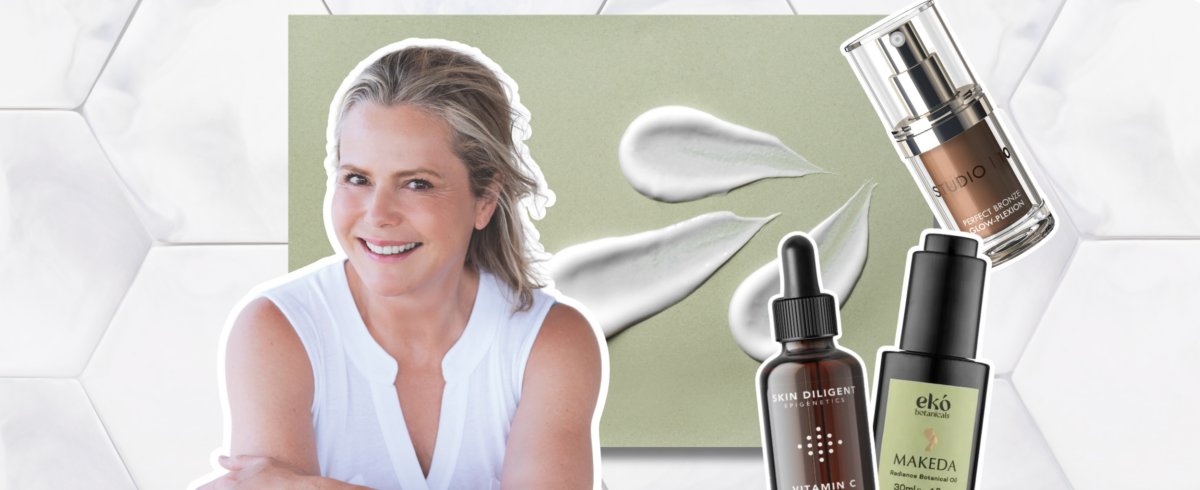


If years of sun exposure have left you with age spots, freckles and uneven pigmentation, you’re certainly not alone. Liz explores the best ways to manage sun damage, sharing the skincare ingredients and treatments that can genuinely help – without the need to splash out on expensive creams.
Plus: The impact of hair dye on gut health, whether testosterone causes hair loss, the health benefits of infrared saunas and choosing the right smart scales.
Stream the episode below, or download the recording via Apple Podcasts or Spotify.
3 ways to reduce age spots in midlife
Age spots (sometimes called liver spots) and uneven pigmentation are caused by an overproduction of melanin, the pigment that gives skin its colour. Appearing as dark patches on the face, hands, arms and chest, they are very common in midlife, especially if you’ve enjoyed many years of sunbathing or lots of time outdoors.
The good news is, while you can’t erase the past, there are steps you can take to fade existing pigmentation and prevent it from worsening.
The skincare ingredients that can help
You don’t need expensive luxury creams to tackle pigmentation, explains Liz. She recommends focusing on ingredients such as niacinamide, vitamin C, azelaic acid and liquorice root extract to reduce dark patches. “These can all help with brightening and evening out pigmentation pretty gently,” she says.
Unless you know your skin tolerates them well, be cautious with stronger actives such as retinols, especially if you are prone to eczema.
Protecting your progress
One of the most effective ways to manage pigmentation is stopping existing marks from becoming darker, says Liz.
That means protecting frequently exposed areas such as the face and backs of the hands with a mineral SPF, alongside practical measures such as wearing a hat, covering arms with lightweight clothing and taking shade when the sun is strongest.
“The key is finding that sweet spot between beneficial light exposure and burning or chronic overexposure,” says Liz.
When creams aren’t enough
For more significant pigmentation, professional in-clinic treatments may deliver faster and more noticeable results than skincare alone. IPL (intense pulsed light) therapy and laser treatments can be especially helpful for pigmentation, as can dermatologist-administered chemical peels.
While these treatments can be expensive, they may prove more cost-effective than years of investing in products that might not produce an impactful difference.
But as Liz reminds us, rather than seeking perfection, the focus should be on skin that feels healthy and less reactive. “I think we need to slightly scale back from this idea that we need to be totally blemish free, especially as we age,” she says. “Healthy skin is not the same as flawless skin – it’s skin that is resilient and comfortable.”
Also in this episode:
- Are infrared saunas good for my health?
- The impact of hair dye on gut health
- Are tallow creams effective for eczema-prone skin?
- Is testosterone causing my hair to shed?
- The benefits of smart scales and which to choose
- How can I improve the look of my sun-damaged skin?
- Liz’s tips for creating a healthy nighttime routine
- Should I change my HRT now my periods have stopped?
Links mentioned in the episode:
- Read 11 ways to help thinning hair look thicker in midlife
- Balance hormone app
- Withings smart scale
- Tanita smart scale
- Renpho smart scale
Get in touch with a question for Liz:
- Email: [email protected]
- WhatsApp: 07518 471 846
More from Liz:
- Order Liz’s new book – How to Age
- A Better Second Half
- Follow Liz on Instagram
- Follow Liz Earle Wellbeing on Instagram
Some links may be affiliate links, which help support the show at no extra cost to you. Read our Affiliate Policy for more information.